About the Wastewater Treatment Facility
The Pittsfield Wastewater Treatment Facility treats wastewater from homes and businesses before safely discharging clean water to the Suncook River. This process protects public health, supports aquatic life, and safeguards downstream communities that rely on river water as a drinking water source.
System Fast Facts
1
1979-1980
The facility was originally constructed in 1979-1980 and was designed to treat up to 0.4 million gallons per day (MGD).
2
7 Pump Stations
There are 7 pump stations community wide, including three large pump stations on Joy Street, Barnstead Road, and South Main Street.
3
11 Miles of Sewer Pipes
The system has nearly 11 miles of sewer pipes connecting the community to the treatment facility.
4
550 System Connections
There are currently 550 system connections affecting approximately 1,500 residents.
How the System Works
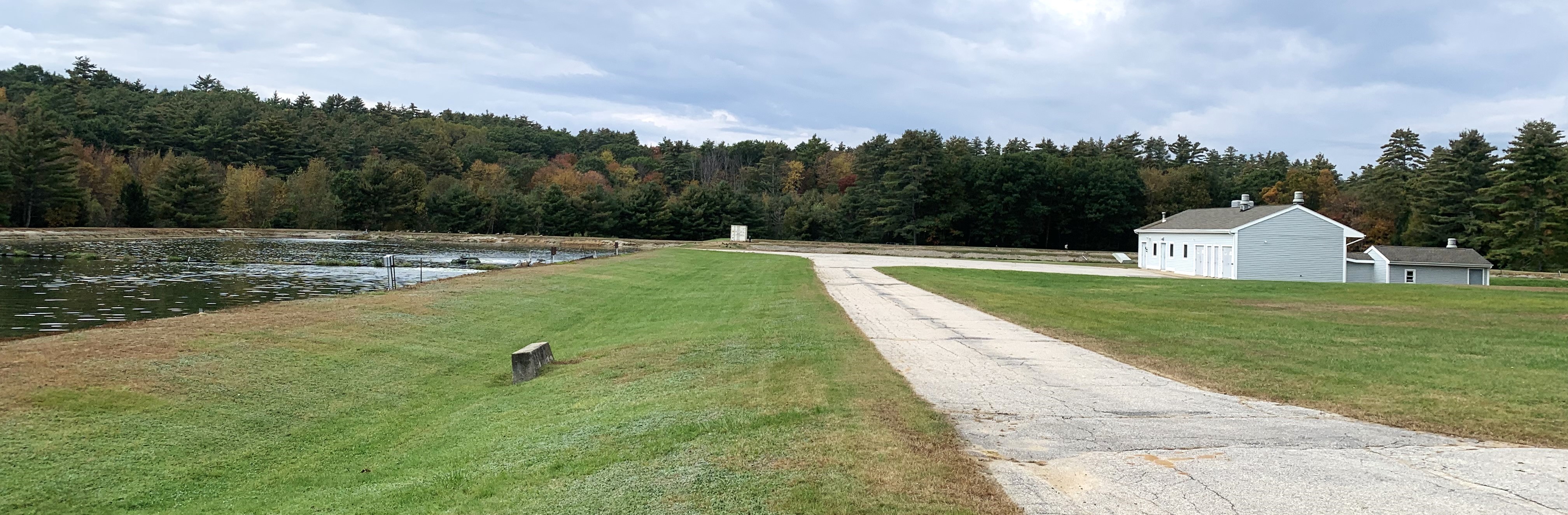
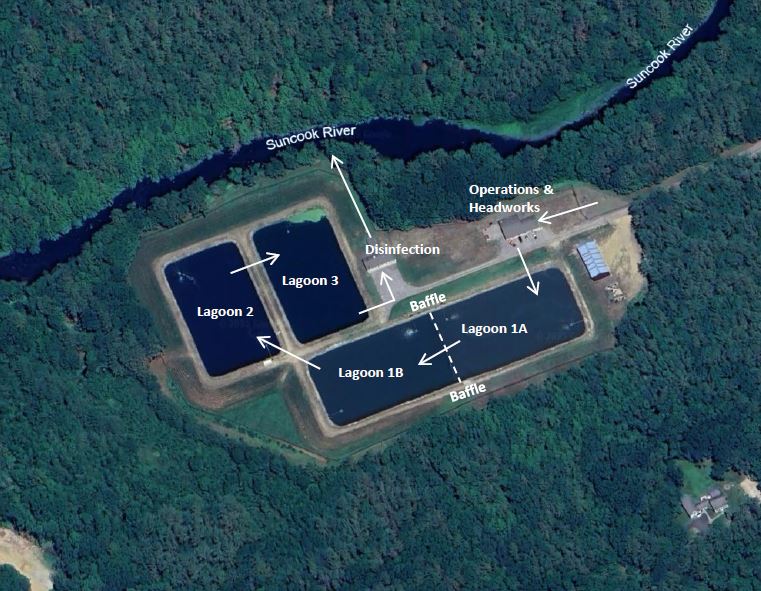
Pittsfield’s facility uses an aerated lagoon treatment system, which allows wastewater to be treated slowly over an extended period of time. The process is designed to allow solids to settle out in the lagoons while bacteria is broken down with the help of mechanical aerators injecting oxygen into the lagoon water. This type of system is simple, effective, and economical to operate but requires periodic sludge removal to continue functioning properly.
Managing the stored solids in the lagoons and maintaining sufficient capacity to treat the wastewater is essential to keep the wastewater treatment facility in compliance with the US EPA discharge permit.
Regulatory Compliance
The Pittsfield Wastewater Treatment Facility operates under a federal National Pollutant Discharge Elimination System (NPDES) permit, which sets limits and requirements to ensure treated wastewater discharged to the Suncook River protects water quality and public health. The Town has recently (2023) received a new NPDES permit with more stringent requirements than the previous permit (2015), reflecting stricter environmental standards and a greater emphasis on treatment performance.
Over time, the Pittsfield Wastewater Treatment Facility has experienced periods where meeting all permit limits has become more challenging. Over the past two years the facility has experienced violations to the facility’s permit, largely due to aging infrastructure and the accumulation of sludge in the treatment lagoons. The proposed lagoon cleaning project is the first step to restore treatment capacity while other treatment options are considered for the facility long-term.
Lagoon Cleaning Project
The sludge removal project is the first phase of improvements needed to restore the treatment capacity of the facility. The Pittsfield WWTF last had sludge removed in 2001. The 2015 NPDES permit included requirements for phosphorous and metals reduction in the discharged water (effluent) to the river, requiring the operators to add chemicals to the wastewater to enhance solids settling. The chemical addition brought the facility into compliance with the 2015 permit but accelerated the rate of sludge settling in the lagoons. Testing completed in 2023 identified approximately 995 dry tons of accumulated sludge, that is consuming nearly 40% of the lagoon’s treatment capacity.
Key Project Elements Included
- Planning & Permitting
Development of a sludge management plan, permitting & project design - Sludge Removal
Mechanical removal of accumulated sludge from the 3 lagoons - Dewatering
Sludge will be dried using mechnical equipment or static “geobags” - Disposal
Transport of dried sludge to an approved disposal facility

A successful bond vote is required to access these state and federal funding sources.
Project Cost & Funding
The estimated total cost of the sludge removal project is $2.66 million. The project is expected to be funded through a combination of gradual sewer rate increases, tax rates, state low-interest loans with 15% loan forgiveness, and potential 20% state grant funding at the completion of the project. Federal funding programs will also be explored in early 2026 to further reduce the loan repayment amount.
This approach allows the Town to spread costs over time rather than creating a one-time impact on tax bills, while taking advantage of available funding assistance to reduce the overall financial impact on ratepayers. A successful bond vote is required now to authorize the project and access these state and federal funding sources; without approval, Pittsfield risks losing grant and loan-forgiveness opportunities and facing higher overall project costs.
 Pittsfield Wastewater Treatment Facility
You must be logged in to post a comment.